

As one of the top three research institutions in the nation, the University of Michigan had nearly $800 million of research expenditures this year. We also continued to transfer innovative ideas into the marketplace with $20 million in licensing revenues and 287 new invention disclosures.
The Institute for Social Research (ISR) received $70 million to continue the Health and Retirement Study, the nation’s leading data resource on the health and economic conditions for Americans over age 50. The award from the National Institute on Aging (NIA), part of the National Institutes of Health (NIH), is the largest single research award in U-M’s history.
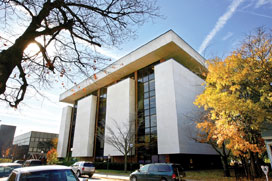 The Health and Retirement Study, co-directed by ISR researchers Robert J. Willis and David R. Weir, gathers data every two years from more than 20,000 people ranging from pre-retirement to advanced age. The survey results are then used to provide a detailed profile over time of older Americans’ physical and mental health, insurance coverage, financial well-being, labor market status, retirement planning, social support systems, intergenerational transfers of time and money, and living arrangements.
Since the study began in 1990, the University has received $96.6 million for the nationwide survey; this amount includes primary funding from the NIH, and also includes support from other federal agencies, including the Social Security Administration.
In September 2005, U-M announced a significant expansion of its efforts in stem cell science with the creation of a new interdisciplinary center for research to be based at the Life Sciences Institute (LSI). The Center for Stem Cell Biology has been established with $10.5 million in funding provided by the Medical School, LSI, and the Molecular and Behavioral Neuroscience Institute (MBNI).
Under the leadership of stem cell scientist Sean Morrison, the Center will recruit up to seven faculty members whose laboratories will be located in LSI, the Medical School, or MBNI. The Center emphasizes using stem cell science to answer the most pressing questions of fundamental human biology, such as how specific tissues in the body are formed and how cells communicate with one another. In looking at the fundamental biology of stem cells, scientists at the Center examine such phenomena as the ability of stem cells to replicate themselves indefinitely, which could provide insight into how cancer cells do the same thing.
U-M scientists have made notable advances in many areas of stem cell science, especially involving tissue-specific and cancer stem cells. The Medical School is home to one of only three National Institutes of Health-funded human embryonic stem cell research centers in the United States.
Innovative ideas are explored on campuses every day. Scientists at U-M have discovered the genes for cystic fibrosis and Huntington’s disease, and alumni launched the iPod and Google. Michigan’s comprehensive research universities—Michigan State University, the University of Michigan and Wayne State University—not only provide programs and faculty in fields critical for the health and wellbeing of society including the economy.
Research and development at state universities has brought in more than $1.3 billion in expenditures this year. It also attracts top faculty and graduate students to Michigan from around the country and the world. In addition, all three universities have made sure that the gains they make in research and development also make their way into the marketplace to better society. In the past five years, university researchers have filed invention disclosures at the rate of one every day and have launched 79 new companies—essentially four start-up companies every economic quarter.
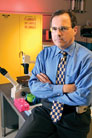 Recently, NanoBio Corporation, an Ann Arbor company founded by Dr. James R. Baker, Jr., the Ruth Dow Doan Professor of Biologic Nano-technology at U-M, secured $30 million in funding from Perseus, L.L.C., a leading private equity fund management company headquartered in Washington, D.C. The investment is one of the largest single institutional investments in a biotechnology company in the state of Michigan. NanoBio Corporation develops therapies and vaccines against infections ranging from cold sores to nail fungus and influenza using a novel nanoemulsion technology developed at U-M.
The life sciences continue to expand and thrive at U-M, as researchers from many disciplines solve complex problems of genetics, and molecular and cellular structure and behavior.
This year, the Life Sciences Institute (LSI) recruited five outstanding faculty members bringing the total faculty count in the Institute to 25. The new LSI hires include the first two faculty members of the U-M Center for Stem Cell Biology, two chemists and a geneticist, with joint appointments in the Colleges of LSA and Pharmacy and in the Medical School. In the three years since the Institute has opened, its researchers have generated more than $20 million in grants and have published more than 200 papers in peer-reviewed journals.
The collaborative approach to life sciences at U-M is especially evident in its stem cell research efforts. OncoMed Pharmaceuticals, a spinoff of U-M research, patented a process for isolating cancer stem cells from solid tumors, such as breast, pancreas, lung and colon cancers. Sean Morrison, director of the Center for Stem Cell Biology, learned to separate cancer stem cells from normal stem cells in the blood-forming system and to kill them selectively. Morrison’s team also established that stem cells don’t just wear out, they actively shut themselves down as they age, perhaps to prevent cancerous growth (see story, page 26). Further, Douglas Engel, chair of cell and developmental biology, captured unprecedented images of a solitary stem cell in the bone marrow of a living animal.
U-M Tech Transfer continued its success in transferring University research discoveries to the market, creating quality of life enhancements and economic opportunity. In fiscal year 2006 U-M Tech Transfer achieved a record number of technology agreements, 97, and launched 9 new business startups, most located and creating job opportunities in Michigan.
The impact of technology transfer can be seen in the stories of the products, services and relationships created with U-M innovations.
A new U-M startup, Zattoo, is developing a global virtual cable network to bring live TV via the Internet. Known as peer-to-peer Internet protocol television, the live video streaming provides high-quality video with less skipping and fewer breaks. Zattoo is headquartered in Ann Arbor with corporate offices in San Francisco and Zurich.
A life-threatening blood disorder called TTP (thrombotic thrombocytopenic purpura) that affects newborn babies and otherwise healthy people in their twenties and thirties may soon be a thing of the past. Howard Hughes Medical researcher and U-M Medical Professor David Ginsburg and his research team have mapped a mutant gene, known as ADAMTS13, that allows the production of a recombinant protein. This discovery, which holds promise as both a diagnostic and a therapeutic, has been licensed to Baxter Pharmaceuticals.
Sean Morrison is director of U-M’s Center for Stem Cell Biology at the Life Sciences Institute and an associate professor of Molecular Medicine and 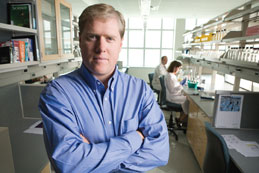 Genetics in the Medical School. He’s also one of the world’s foremost experts in the field of stem cell research. Recently, Dr. Morrison and colleagues from other universities discovered a crucial stem cell mechanism that helps explain why our tissues heal more slowly as we age. It turns out that as people age, their stem cells actually shut themselves down. The result: the older we get, the less our bodies replenish themselves.
Dr. Morrison offers a fascinating hypothesis: Cancer is the unchecked growth of cells with dangerous mutations. The older we get, the more mutations accumulate in long-lived cells like stem cells. To protect itself from cancer, the body gradually closes its own factories—the stem cells. “The good news is that the mechanism we discovered allows us to get older before we get cancer,” says Dr. Morrison. “The bad news is that it makes us get older.”
A U-M Tech Transfer startup, Sensicore, is refining technology to safeguard our municipal water supplies. Sensicore is shipping products that allow municipal water to be tested for contamination in one-tenth of the time previously required. A handheld analyzer screens water for 18 critical measurements in just four minutes, providing the means to extend real-time protection to an entire water system.
 A study by the U-M Transportation Research Institute found that drivers who have conversations with passengers exhibit similar driving performance as those who use cell phones. No statistical difference was found between people talking on a cell phone or those conversing with a passenger in terms of keeping in the correct lane or using proper steering behavior. All forms of “non-driving” behavior including conversation with passengers, grooming, cell phone use, and eating and drinking were found to result in some form of degraded driving performance.
More than a third of this year’s awards from the state of Michigan’s 21st Century Jobs Fund have been given to the University of Michigan’s academic research, spinout companies and research collaborations. U-M faculty were awarded $5.8 million for five projects on the Ann Arbor campus and one at UM-Dearborn. Another $16.4 million went to companies founded by U-M faculty, or using licensed U-M technology. Several other projects, totaling $8.4 million, include some collaboration with U-M researchers. Two statewide, multiuniversity programs administered by U-M were awarded an additional $7.75 million from the fund.