

In October 2005, the University honored two alumni, Charles R. Walgreen, Jr. and Arthur Miller, playwright, with a ceremony in Rackham Auditorium acknowledging the official naming of the Charles R. Walgreen, Jr., Drama Center and the Arthur Miller Theatre.
The ceremony included a remarkable blend of memory and performance. Special guests from the Walgreen family spoke about their dedication to Michigan. Musical performances included Pulitzer Prize-winning composer William Bolcom performing �New York Lights� from his score to the operatic adaptation of Miller�s A View from the Bridge sung by George Shirley, the Joseph Edgar Maddy Distinguished University Professor of Music. A video reminiscence of Miller�s time in Ann Arbor was followed by readings from Miller�s sister, actress Joan Copeland, and son, producer Robert Miller. Enoch Brater, English and theater professor and Miller scholar, spoke about Miller�s work, and Laurence Goldstein, editor of the Michigan Quarterly Review, read from Miller�s letters.
The 97,500-square-foot Walgreen Drama Center will house the departments of theatre and drama, and musical theatre. 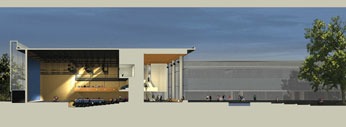 It will replace the Frieze Building as the home for performing arts students. The $42.8 million facility will include the 250-seat Arthur Miller Theatre, as well as rehearsal rooms, specialized studios and classrooms designed for teaching and rehearsing voice; acting for the camera; and design of scenery, lighting and costumes. It will also house faculty offices.
During winter term 2006, many alumni who are part of the Hopwood legacy celebrated the program�s 75th anniversary with a series of events showcasing their work and honoring Avery Hopwood. The Avery and Jule Hopwood Awards Program is the nation�s oldest and largest for creative writing. Since 1931, the program has awarded 3,039 prizes totaling more than $2.1 million.
The anniversary celebration included readings by former Hopwood winners who have gone on to successful literary careers: novelists Elizabeth Kostova, Elwood Reid and Porter Shreve; an exhibit of photos, books and papers by Hopwood Award-winning authors at the Hatcher Graduate Library; a Hopwood film festival; a reading by MacArthur Award-winning poet Alice Fulton; a lecture by author and former U-M faculty Charles Baxter; and the 2006 undergraduate and graduate awards ceremonies where 21 U-M students received $21,750 in writing prizes.
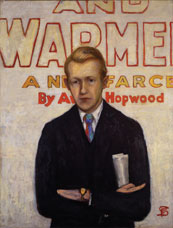 Hopwood, a 1905 U-M graduate and popular 1920s playwright, wanted to create a contest at his alma mater that would develop and encourage young writers. While his own work was successful enough to have had four shows on Broadway simultaneously, he never felt that he had been able to create truly memorable writing. Under the terms of his will, one-fifth of his estate, a $313,836 endowment, was given to the Regents of the University to encourage creative work in writing.
Notable Hopwood winners include:
Max Apple, John Ciardi, Mary Gaitskill, Robert Hayden, Lawrence Kasdan, Laura Kasischke, Jane Kenyon, Arthur Miller, Howard Moss, Frank O�Hara, Marge Piercy, Ronald Wallace and Nancy Willard.
 In 2006, the University of Michigan�s School of Music marked its 125th Anniversary with a season of concerts and events that celebrated the School�s rich history and even brighter future to come.
Highlights included a 125th Anniversary Inaugural Concert with the Michigan Chamber players and a welcome by the School�s new dean, Christopher Kendall. Longtime members of the School�s faculty shared �Tales of the School of Music: Thoughts and Ideas from 125 Years of Music at Michigan.� Throughout the year, recitals, workshops and concerts by U-M students, faculty and guests were featured to represent 125 years of tradition and to provide a glimpse into the future of artistry through current and coming artists.
In partnership with the Institute for the Humanities, the School also hosted a conference, �Opera in the Americas�American Opera,� that assembled a rich cast of scholars, singers, directors, impresarios, critics and conductors in a wide-ranging discussion of the culture of opera on the continents of North and South America.
 To top off the eventful year, in spring 2006 the School of Music was renamed the School of Music, Theatre & Dance to encompass all three essential disciplines of the school.
�A time to break silence,� was the theme of U-M�s 2006 Rev. Dr. Martin Luther King Jr. Symposium. Spirited spoken word shows, lectures and other presentations highlighted the annual event in its 19th year. The keynote speaker was author, actress and playwright Anna Deavere Smith. Other events included the MLK Day of Service, a student/community poetry slam featuring Saul Williams, and New Orleans jazz band Hot 8 at the Michigan Theater. Rosa Parks, who passed away on Oct. 25, 2005, at age 92, was also honored during the symposium.
The Royal Shakespeare Company (RSC) returns to the University of Michigan campus for a three-week residency in October and November 2006, featuring performances of Antony and Cleopatra, Julius Caesar and The Tempest, with film and television star Patrick Stewart in leading roles. This is its third residency since 2001, when U-M became the first American university to partner with the RSC.
Each year the Center for Sustainable Systems based at the U-M School of Natural Resources and Environment invites an internationally recognized expert to deliver the Peter M. Wege Lecture on Sustainability. In October 2005, former Vice President Al Gore, a dedicated proponent of international environmental issues, presented the 5th annual lecture on �Global Climate Change� at the Power Center for the Performing Arts.
Microsoft Chairman and Chief Software Architect Bill Gates was awarded the College of Engineering�s (CoE) prestigious Goff Smith Prize in October 2005. Gates addressed students about the promise of innovation and the excitement of careers in computer science in a lecture titled, �The Impact and Opportunity of Technology: Why Computer Science? Why Now?� He also discussed his vision for the future and answered questions from students.
 In January 2006, the College of Engineering opened a new Computer Science and Engineering Building, a $40 million, 100,000-square-foot facility that provides space for 56 faculty, 11 new laboratories, and a single home for the Computer Science and Engineering department that had been spread across three buildings on campus.
 U-M�s new Biomedical Science Research Building (pictured on the cover) opened with fanfare in February 2006. The $220 million facility features a five-story atrium, faculty offices, seminar rooms, a large auditorium and lab space organized around research themes such as molecular imaging, nanotechnology, regenerative medicine and gerontology. A visit by Governor Jennifer Granholm, who called the building �a gift to the state,� emphasized the importance of this large research facility and resource.
The new Frankel Institute for Advanced Judaic Studies was launched in November 2005 through a $20 million gift from the Samuel and Jean Frankel Jewish Heritage Foundation�the largest gift dedicated to Judaic Studies at any American university and a record for the College of Literature, Science, and the Arts. The Institute, located within the existing Frankel Center for Judaic Studies, brings 14 leading scholars to U-M each year to collaborate on the research of Jewish history, culture, literature and religion.
 The Gerald R. Ford School of Public Policy moved into its new world-class academic facility in fall 2006. The 80,000-square-foot Joan and Sanford Weill Hall features classrooms, a library, research centers, a computer laboratory, faculty offices, and public spaces for conferences and lectures. The new $35 million facility houses the entire Ford School faculty, staff and students in one location instead of three separate buildings.
Construction started in June 2006 on the Stephen M. Ross School of Business complex. The heart of the 270,000-square-foot building will feature a glass-enclosed academic �town square� surrounded by programmatic components, including an auditorium and classrooms that encourage interaction among teachers and students, faculty offices and student services. More than half of the project�s $145 million costs are funded by a gift from Stephen M. Ross, a 1962 business school alumnus, whose $100 million donation in 2004 was the largest in U-M history. The school was renamed in his honor.
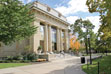 In June 2006, the University of Michigan Museum of Art (UMMA) reached its $35.4 million fundraising goal for its expansion and restoration project. UMMA�s home�Alumni Memorial Hall�closed to the public on June 25, 2006, to prepare for construction. Until fall 2008, the museum will be operating a temporary exhibition space called UMMA Off/Site that will present exhibitions devoted to photography, film and video.