

Citing her �exemplary� leadership, the University of Michigan Board of Regents reappointed President Mary Sue Coleman to a second five year term when her contract expires in July 2007.
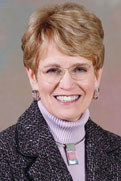 The Regents were unanimous in their praise of Coleman, which followed an extensive performance review that included input from faculty, staff, students and others engaged with the University.
�The results were overwhelmingly positive. In fact, I think someone might challenge that words like �overwhelmingly positive� might be an understatement,� said Regent S. Martin Taylor, chair of the Board�s Personnel, Compensation and Governance Committee. �President Coleman has been exemplary. She has established a track record of outstanding accomplishments.�
As president, Coleman has enhanced the University�s international reputation as an institution dedicated to exemplary teaching, pathbreaking research, and public service that changes lives.
She has been a champion for critical areas of U-M research, such as nanotechnologies and stem cell biology, which have the potential to transform both personal well-being and the economy of Michigan through new discoveries.
She has been the driving force behind the $2.5 billion Michigan Difference campaign that will increase support for students at all levels, endow professorships for faculty, and construct and renovate classrooms and laboratories across the campus.
Her dedication to U-M�s role in advancing the state�s economy was a key element of the decision by Google to establish a corporate office, with 1,000 jobs, in Ann Arbor. The Google presence complements the partnership between the University and the Internet giant to digitize some seven million volumes of the University Library and make them accessible to the public.
Coleman has been a tireless advocate of widening access to the University for students of all backgrounds. She has traveled throughout the state to meet with high school students and share her enthusiasm for higher education, while also increasing financial aid and establishing the M-PACT program that provides additional support for those students with the greatest needs.
Her commitment to access and excellence is an extension of the valuable leadership she provided in U-M�s successful defense of affirmative action before the U.S. Supreme Court, a ruling that established Coleman as a national spokesperson on the educational value of diverse perspectives in the classroom.
�Being president of this great University is a complex and difficult undertaking,� said Taylor, �and we have been fortunate to have Mary Sue Coleman.�
Coleman joined the University in the fall of 2002 after serving as president of the University of Iowa for seven years.
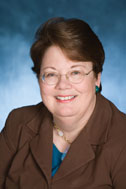 Teresa A. Sullivan, the former executive vice chancellor for academic affairs of the University of Texas System (U-T), was selected as provost and executive vice president for academic affairs of the University of Michigan (effective June 1, 2006). As chief academic and budgetary officer, she is responsible for sustaining and enhancing academic excellence in the teaching, research and creative endeavors of U-M's 19 schools and colleges as well as numerous interdisciplinary institutes and centers. She is also a tenured professor of sociology in the College of Literature, Science, and the Arts.
While at U-T Austin, Sullivan was a professor of sociology and professor and Cox & Smith Inc. Faculty Fellow in law. She also held several administrative positions.
Sullivan, who specializes in labor force demographics, has authored or co-authored six books and more than 50 scholarly articles. She served as past secretary of the American Sociological Association, a fellow of the American Association for the Advancement of Science, and past chair of the U.S. Census Advisory Committee. She earned her BA from James Madison College at Michigan State University and received her PhD in sociology from the University of Chicago.
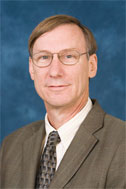 Stephen R. Forrest was named vice president for research at the University of Michigan (effective January 1, 2006). He serves as an executive officer and oversees a research enterprise with nearly $800 million of research expenditures this past year, one of the largest university research programs in the country.
Forrest was the James S. McDonnell Distinguished University Professor of Electrical Engineering at Princeton where he led the Optoelectronic Component and Materials Laboratories, acted as chair of the Princeton Electrical Engineering Department, and directed Princeton's Center for Photonics and Optoelectronic Materials. While on the faculty of the University of Southern California, he directed the National Center for Integrated Photonic Technology.
Forrest has authored 371 scholarly papers and has been awarded 134 patents. He is a member of the National Academy of Engineering and a Fellow of the IEEE and the Optical Society of America. He earned his BA from the University of California and received his MSc and PhD in physics from U-M.
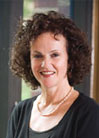 Deborah Loewenberg Ball, the William H. Payne Collegiate Professor of Education, was named dean of the School of Education. She joined the faculty in 1996 as professor in the Educational Studies Program and was an Arthur F. Thurnau Professor from 2000-03, the highest honor U-M bestows on faculty for contributions to undergraduate education.
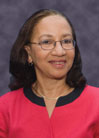
C.Olivia Frost, professor and associate dean for academic affairs, was named interim dean of the School of Information (SI). A U-M faculty member since 1977, she was part of the creation of the new SI and has worked with the school to realize its vision of bringing together multidisciplinary faculty and students to provide leadership in professional education and research related to information.
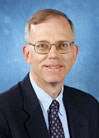
David C.Munson, Jr., was appointed as the Robert J. Vlasic Dean of Engineering. Dr. Munson has been chair and professor in the Department of Electrical Engineering and Computer Science at the University of Michigan since 2003.

Kathleen M. Potempa was named dean for the School of Nursing. She previously served as vice president and dean of the School of Nursing at Oregon Health and Science University (OHSU) in Portland since 1996. She provided leadership in the OHSU health system, including oversight of the professional development of nursing and all educational outreach programs in the state of Oregon.
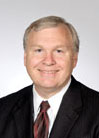
Douglas L. Strong was named director and chief executive officer of the U-M Hospitals and Health Centers (UMHHC) after serving in the post on an interim basis since October 2005. He joined U-M in 1998 from the University of Chicago, where he had served as chief financial officer and associate dean of the Pritzker School of Medicine and the Biological Sciences Division. He was named interim CFO of UMHHC in 2002 and appointed to the permanent position in 2004.
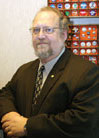
Jack Kay was named provost and vice chancellor for academic affairs, and professor of communication, with tenure, at UM-Flint. He previously served as associate provost for student services, interim dean of the College of Urban, Labor and Metropolitan Affairs, and professor of communication at Wayne State University.
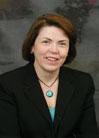
Susan W.Martin, former executive associate vice president for academic affairs at Grand Valley State University, was named provost and vice chancellor for academic affairs at UM-Dearborn. She will also act as a professor of accounting in the UM-Dearborn School of Management.